✓
No Minimum Order
✓
Friendly Service
✓ Fast Nationwide Delivery
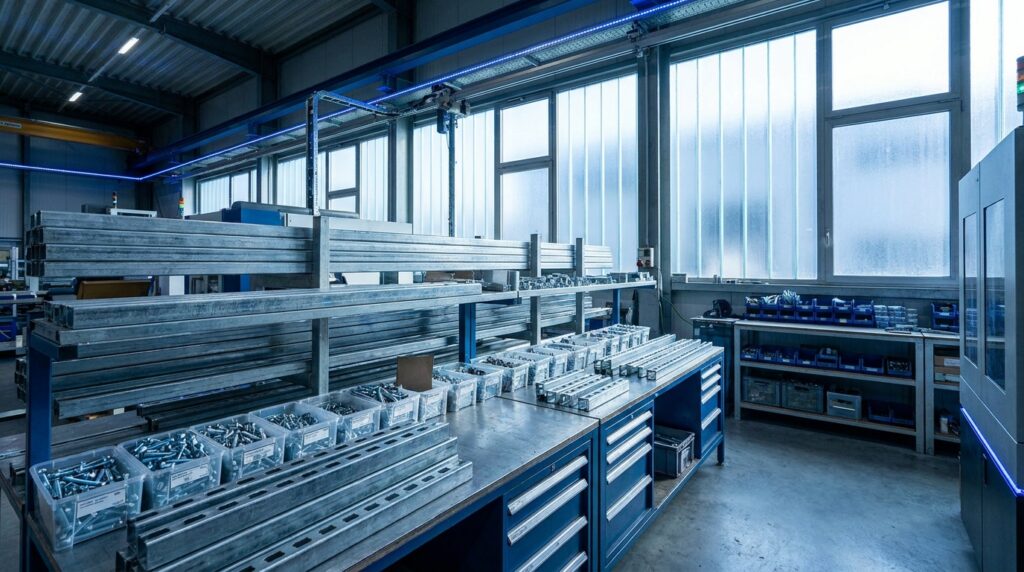
Industrial hardware almost never gets attention, yet it does the heavy lifting behind walls and ceilings every day. Buildings, bridges, data centres, and factories all depend on parts most people never think about. They stay out of sight and usually out of mind.
Heading into 2026, though, this quiet corner of construction is changing faster than many expected. After a long stretch of small, gradual updates, new materials and smarter designs are finally showing up.
At the same time, global demand is shifting, including how supply chains work. Together, these forces are pushing strut channel systems and fastening systems into a clearly different phase.
This article explains what’s ahead in clear, simple language, without buzzwords. It covers why industrial hardware still matters in 2026, how strut channel systems are beginning to change, and what fastening systems may realistically look like next.
Along the way, it blends real market data with practical examples and points out common mistakes that still show up in the field.
If someone is simply curious or works around construction or manufacturing, the focus stays on making these changes easy to understand and genuinely useful.
Trusted research is referenced throughout, with trends explained in short, plain terms. For readers interested in hands-on cutting and fabrication tied to industrial hardware, professionals at Direct Cutting work with these materials every day on real shop floors, keeping the link between ideas and real-world use clear.
Higher expectations are changing industrial hardware. Projects now need parts that last longer, install faster, work with renewable energy systems, and fit neatly into smart buildings.
That’s a clear change from the past, when strength and price were usually enough and extra features didn’t matter much. Today’s builds are more complex, and the hardware has to match how people really use these spaces every day.
The size of the market helps explain the push. The global industrial fasteners market is valued at over 100 billion USD and keeps growing through 2026 and beyond.
Construction, electric vehicles, renewable energy, and large infrastructure upgrades are all driving that growth across both mature and emerging markets (the mix matters). The demand is wide, and it’s consistent.
Global industrial fasteners market overview
| Metric | Value | Year |
|---|---|---|
| Global industrial fasteners market size | USD 103, 110B | 2025, 2026 |
| Forecast market size | USD 146, 156B | 2033, 2036 |
| Asia-Pacific market share | ~45% | 2025 |
Source: Grand View Research
Grand View Research points to rising demand for corrosion-resistant, lightweight materials and fasteners designed for automated assembly. The effect goes beyond materials alone. These changes shape how buildings are put together and how equipment is maintained, affecting real performance on busy job sites and nonstop factory floors (day in, day out).
Strut channel often sits out of sight, but it carries a lot of responsibility on modern job sites. It holds wiring and piping in place across projects big and small, and by 2026 these systems are more specialized than many people expect. They rarely get attention, yet build schedules depend on them doing their job without issues.
Modular design is a clear shift. Crews prefer strut channel setups that install fast and adjust on site without extra steps. Pre-engineered parts cut down on cutting and drilling, which leads to less wasted material and less cleanup. On tight timelines, this kind of setup helps control labor costs while work keeps moving.
Market data shows consistent demand. Data centers, solar installs, and commercial builds need support systems that adjust as layouts change, and strut channel handles that well. Growth keeps moving forward.
Strut channel market growth
| Metric | Value | Year |
|---|---|---|
| Global strut channel market size | USD 1.85, 2.12B | 2025 |
| Estimated market size | USD 1.94, 2.27B | 2026 |
| Forecast market size | USD 2.75, 3.35B | 2032, 2034 |
Source: Intel Market Research
Higher load capacity is also shaping new designs. Buildings now pack in more cabling, cooling, and safety gear, often in tight spaces. High-load options handle that weight without custom fabrication. Stainless steel and galvanized finishes appear more often too, especially outdoors or near the coast, where corrosion is a real concern.
Fasteners may look the same at first glance, but the real progress shows up once they’re on the job. By 2026, designs focus on specific industries instead of broad, one-size-fits-all uses. This change stays quiet, but it shows up over time in parts that last longer and fail less often when conditions get rough.
Lightweight, high-strength alloys are now standard in areas like electric vehicles and aerospace. Cutting weight without losing strength makes a clear difference in performance and efficiency. Corrosion-resistant coatings keep moving forward too. They don’t grab much attention, but they extend service life in places like wind farms and marine projects, where constant exposure is hard to avoid.
Automation is also shifting expectations. Fasteners must move smoothly through robotic assembly lines, pushing tighter tolerances and improving consistency. Notes from BGMFG, a manufacturing-focused source that tracks production trends, show digital inspection and traceability becoming common across production, from raw material to finished part (BGMFG).
Mistakes still happen. Picking the wrong coating or material can cause early failure, and over-tightening fasteners meant for lighter loads is still common. Small choices like these often show their effects sooner than expected.
By 2026, buyers expect industrial hardware to last longer and create less waste, and that expectation is already shaping real projects. Strut channel systems and fastening systems are judged on durability and lifecycle impact, not just upfront cost.
For anyone specifying hardware, sustainability is no longer a side note, it’s part of everyday decision-making.
Material choices show how much things have changed. Manufacturers are moving toward recyclable options and longer service life, and the difference is clear.
Galvanized finishes cut down corrosion over time, while stainless steel holds up well in harsh settings without frequent maintenance.
Modular strut channel systems add more value by allowing reuse during upgrades or reconfigurations, instead of full removal and replacement.
Supply chains are changing just as fast. Global disruptions showed the risks of far-off suppliers, pushing more companies toward regional sourcing and local production.
Shorter shipping routes mean fewer delays and more predictable timelines for ongoing work.
Choosing industrial hardware gets easier once the real limits are clear. The biggest one is the setting where the hardware will live.
Outdoor sites or damp areas do better with corrosion‑resistant materials that last longer and cut down on upkeep later.
Planning for change before installation also saves time and headaches. Modular strut channel systems allow upgrades without tearing things apart, while fasteners should match both the expected load and the way they’ll be installed.
Automation adds another factor, hardware made for automated systems acts differently than traditional options, so it helps to think through those differences early and avoid surprises during setup.
Fabrication choices affect performance more than many expect. Accurate cutting and tight tolerances help parts line up properly, and skilled fabrication partners can make a real difference in how smoothly the full system comes together.
Market research from sources like Transparency Market Research points to consistent growth and new hardware options entering the market over time (Transparency Market Research).
Industrial hardware includes parts like fasteners and strut channels used to build, support, and secure structures and equipment. These components are common in construction, manufacturing, energy, and infrastructure projects.
Strut channel systems are flexible and easy to install. They allow builders to support pipes, cables, and equipment without custom welding or drilling, saving time and labor.
Fastening systems in 2026 and beyond will focus on lighter materials, better corrosion resistance, and compatibility with automated assembly. Some fasteners will also support digital tracking and quality control.
Yes. Longer-lasting and recyclable materials reduce waste and maintenance costs. Many projects now require sustainability as part of their design standards.
Consider load requirements, environment, and installation method. Using the wrong fastener can cause early failure or safety issues, so matching the fastener to the job is critical.
In addition, innovations in fastening technologies will likely lead to increased use of adhesives and hybrid solutions that combine traditional fasteners with modern bonding methods.
This shift could further enhance design flexibility and reduce the overall weight of assemblies. Additionally, advancements in surface treatments may improve the performance of fasteners in harsh environments, extending their lifespan.
As industries continue to prioritise efficiency, the integration of smart technologies into fastening systems will become more prevalent, enabling real-time monitoring of structural integrity. Ultimately, these developments will contribute to safer and more sustainable engineering practices.
As 2026 gets closer, the path for industrial hardware is getting clearer each month: systems are becoming smarter, stronger, more modular, and easier to adjust.
Strut channel designs now aim for high capacity in tighter spaces, built to handle heavier loads without taking up more room. Fastening systems are changing too, shaped by automation, sustainability goals, new materials, and higher load needs. Jobsite pressure isn’t just talk.
Everyday build demands are driving these changes, and the hardware is keeping pace right alongside them.
These shifts show up in real choices, not vague upgrades. Decisions like material selection or load planning now bring bigger cost and safety effects, and they shape long-term performance beyond what shows up on a spec sheet.
Watching these trends helps projects feel planned instead of rushed, especially as modern structures continue to come together behind the scenes.What is Strut Channel Used For?