✓
No Minimum Order
✓
Friendly Service
✓ Fast Nationwide Delivery
You've likely lost more hours than you'd care to admit sitting in morning traffic just to reach an industrial support components supplier only to find they're out of the one bracket you need.
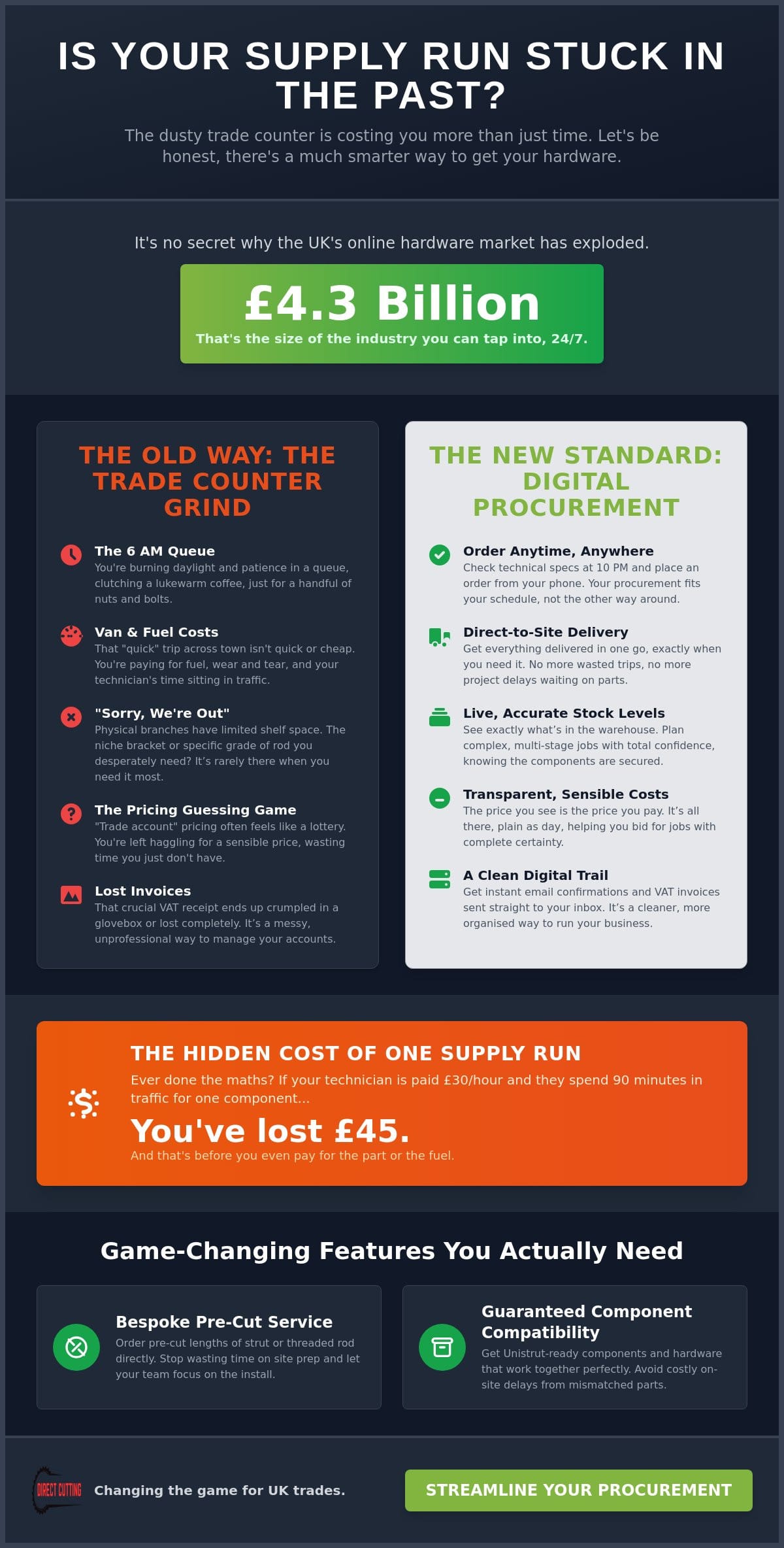
It's a frustrating, old-fashioned way of working that's costing you money, especially when the UK's online hardware market has grown to a massive £4.3 billion for a reason.
Honestly, the days of relying on "mate's rates" and opaque pricing at local branches are quickly fading.
I get it; you're probably used to the routine of the trade counter, but digital procurement is actually about getting more control over your site's efficiency.
Here's the deal: we're going to look at how the latest 2026 safety regulations are changing what you buy and why direct-to-site delivery is the secret to faster procurement cycles.
We'll also look at exactly what makes a digital partner worth your time, from sensible pricing to guaranteed component compatibility.
It's 6:15 AM on a Tuesday. You're standing in a queue at a local wholesaler, clutching a lukewarm coffee whilst the rain lashes against the window. All you need is a handful of nyloc nuts and a few lengths of channel to finish the job. Then comes the blow: "Sorry mate, we're out of stock on those."
Suddenly, your entire morning is shot. You've wasted fuel, time, and patience just to be told that a basic component isn't on the shelf. This scenario has played out a thousand times across the UK, but things started to shift around 2020. Tradespeople realised that the physical trade counter, whilst nostalgic, is often the biggest bottleneck in their project.
To better understand this concept, watch this helpful video:
The reality is that time is the most expensive component on any job site. If your team is sitting around waiting for a van to return from a fruitless supply run, you're losing money. Moving to a dedicated industrial support components supplier online isn't just about convenience; it's about survival in a margin-tight industry.
Have you ever actually sat down and calculated the cost of that "quick" trip to the wholesaler? If you're paying a technician £30 an hour and they spend ninety minutes in London or Birmingham traffic, you've spent £45 before they've even touched a beam clamp. Add in the cost of fuel and van wear, and that local convenience starts to look like a massive liability.
Physical branches have limited shelf space. They prioritise high-turnover items, which means niche brackets or specific grades of threaded rod are rarely in stock when you need them. It's an illusion of convenience that often ends in a second trip or a compromised install.
Younger site managers are ditching the reactive buying habits of the past. They prioritise digital-first sourcing because it allows for better planning and a clear digital paper trail. This shift is deeply rooted in modern supply chain management principles, where predictability is valued over proximity.
Ordering everything to arrive on-site in one go means less downtime and fewer surprises. You get an email confirmation, a VAT invoice that doesn't get lost in a glovebox, and the peace of mind that your materials are actually on their way. It's a cleaner, more professional way to run a trade business.
The shift to digital isn't just a trend; it's a fundamental change in how we work. Honestly, the old way of haggling over a trade counter feels like a relic. When you use a digital platform, you get 24/7 access to technical specs. That's vital when you're checking load ratings at 10 PM for a job starting the next morning.
Pricing is another big one. We've all seen the "trade account" games where the price depends on which side of the bed the manager woke up on. Moving to a specialist industrial support components supplier online means you see sensible, transparent pricing from the start. You don't have to waste time asking for a better rate on a few wedge nuts or cantilever arms. It's all there, plain as day.
Here's where it gets interesting: the bespoke side of things. You can now order pre-cut lengths for strut or threaded rod directly from your phone. This isn't just about buying parts; it's about outsourcing the prep work so your team stays on the tools. It makes the whole process faster and much cleaner on site.
Knowing exactly what's in the warehouse beats a "maybe" over the phone every single time. It allows for precise project planning. If you're managing complex HVAC support systems, you can't afford to wait three days for a missing bracket.
Digital inventory lets you plan multi-stage installs with total certainty. You can see what's available and secure it before the first van even leaves the yard. This level of transparency is exactly what the modern trade needs to stay profitable.
Generalist retailers often struggle with the technical nuances of our trade. They might have the basics, but they rarely understand the digital transformation of manufacturing that's making parts more specialised. Specialists like Direct Cutting focus on technical compatibility.
Everything we stock is designed to work with major systems like Unistrut. This specialist knowledge prevents those "wrong part" headaches that stall a site for hours. It's about getting the right technical solution, not just a box of metal.
Let's talk about the elephant in the room: price. There's a common worry that buying online means you're getting sub-par steel that belongs in a scrap heap rather than on a professional site.
Honestly, I've seen some horror stories where "bargain" brackets have buckled under the weight of a standard cable tray. It's a dangerous game to play because your entire installation is only as strong as its weakest bracket.
If a single point of failure causes a heavy HVAC unit to drop, the few quid you saved on the part won't cover the insurance nightmare that follows. Real value isn't about finding the cheapest possible metal; it's about finding a reliable industrial support components supplier that offers sensible pricing by cutting out the middleman, not the quality control.
You're looking for a partner that understands technical specs, not just someone shifting boxes. When the price is sensible rather than suspiciously low, you can usually trust the steel is up to the task.
Vibration is the silent enemy of any industrial frame. Over months of operation, machinery hum and constant air flow can slowly back off standard fixings until the whole structure starts to groan.
This is why a nyloc nut is non-negotiable for professional installs. The nylon insert provides that extra bit of friction that keeps the assembly together when the building starts to move. It's a small component, but it's the difference between a job that lasts decades and one that needs a call-back in six months.
The same logic applies to beam clamps. If they aren't certified for the specific load, they shouldn't be on your site. Using unverified clamps to save a few pennies is a massive gamble with site safety that just isn't worth the risk.
Our weather doesn't take prisoners. If you're sourcing parts, you need to be crystal clear on whether you need zinc plated or hot-dipped galvanised finishes for the job at hand.
Zinc is perfectly fine for dry, indoor environments like a clean plant room. However, it won't last a single season on a rooftop in Manchester or Birmingham before the rust starts to set in. Then there's the more technical stuff like hydrogen embrittlement, which is a real risk in low-grade threaded rods.
The manufacturing process can sometimes leave the metal brittle, leading to a sudden, catastrophic snap under tension. It's why vetting your source is so important, a point echoed in the UK Parliament report on digital procurement which warns about the risks of poor supplier oversight.
Always double-check that your strut channel meets the specific site standards before you start cutting. It's better to spend five minutes checking the grade now than five days fixing a collapsed run later.
Here's where it gets interesting: not all websites are created equal. You've likely seen those flashy, generic hardware sites that look like they were designed by someone who's never stepped foot on a construction site. Honestly, a shiny shopfront is useless if the people running it don't know the technical difference between a purlin clip and a z bracket.
When you're choosing an industrial support components supplier, you need to look for markers of actual industry experience. One of the biggest tells is the mention of being "Unistrut Compatible." It's a small detail, but it shows they understand the universal standards we actually use on the job. If they don't mention compatibility, you're basically guessing if their channel will fit your existing brackets.
You also need to verify how they handle the heavy stuff. A reliable partner doesn't just sell single nuts and bolts; they should have a clear approach to bulk orders and rapid delivery. If their shipping times are vague, your project timeline is already at risk. Don't be afraid to test them before you commit to a major order.
A true specialist knows that a support system is exactly that: a system. You should check if they understand how a cable tray integrates with various strut configurations. It's not just about the tray itself, but the accessories that make the install work. Use this quick checklist when browsing:
Do they stock the right square plate washers to secure those joints?
Can they provide pre-cut lengths of channel to save your team from grinding on site?
Is there a clear technical guide for load ratings on their cantilever arms?
Do they carry the correct spring nuts for strut channel to keep fixings secure on vertical runs and prevent costly on-site wrestling matches?
If a supplier offers these specific services, it's a good sign they've actually listened to what tradespeople need. It shows they're focused on your efficiency, not just their own profit margins. It's about getting the right technical solution, not just a box of metal.
Digital sourcing shouldn't mean talking to a robot or a call centre in another country. Try asking a technical question about the load capacity of an M12 threaded bar or the finish on a channel base plate. If the response is slow or filled with corporate fluff, move on.
You want a supplier that speaks your language. A pragmatic, no-nonsense approach is always better than a slick sales pitch that dodges the technical details. Honestly, the best partners are the ones who can tell you exactly why a certain bracket is right for your HVAC install without needing to "check with a supervisor."
If you need parts that actually fit the first time, take a look at our range of technical bracketry and fixings for your next project.
Most big-box retailers are great if you need a new lawnmower or a tin of emulsion for the spare room. They're usually a disaster when you're standing on a site needing a specific bracket to finish a pipework run. They lack the technical depth that a specialist industrial support components supplier brings to the table.
Direct Cutting isn't trying to be everything to everyone. We don't do flashy marketing because we know the utility of the hardware speaks for itself. We're built for the HVAC installers and electricians who value their time as much as their bottom line. It's a no-nonsense approach that puts technical reliability ahead of aesthetic appeal.
Our service for cut to size strut channel and threaded rod is where we really stand out. It means your team isn't wasting hours with an angle grinder or a hacksaw. It's about being a dependable partner that understands the rugged professionalism of the UK trade.
Sourcing everything from trapeze brackets to simple hex head screws shouldn't feel like a part-time job. We've organised our inventory to be a one-stop-shop for all your support components. Whether you need a specific beam clamp or a handful of m8 nuts, it's all there in a logical flow.
This convenience isn't just about a shiny website; it's about stock reliability. When we say it's in the warehouse, it's in the warehouse. You won't get that dreaded phone call two days later telling you a basic part is on backorder. We know that in the construction industry, a delay on one component can stall an entire project.
Honestly, you just want to get the job done correctly and move on to the next one. A straight-shooting supplier is a tradesman's best friend because they remove the ambiguity from procurement. You know the pricing is sensible, you know the parts are compatible, and you know they'll show up when promised.
The trade is shifting. The dusty trade counters of the past are being replaced by a digital-first mindset that prioritises efficiency over tradition. It's not about losing the human touch; it's about using better tools to manage your supply chain. On your next project, try stepping away from the 6 AM wholesaler rush and see the difference a specialist digital partner makes to your workflow. The future of the trade isn't just about better tools on your belt, it's about a smarter way to get them there.
The transition to digital procurement isn't just about clicking buttons; it's about protecting your profit margins and your time. Honestly, the trade is moving too fast to spend half your morning waiting for a local branch to find a box of nuts.
By choosing a specialist industrial support components supplier, you're securing more than just metal. You're getting Unistrut compatible components and sensible trade pricing without the usual corporate games.
Our specialist cut-to-size service for strut and rod is designed to get you on and off site faster than ever. It's a simple, pragmatic shift that puts you back in control of your project timeline.
Browse our range of professional support components at Direct Cutting and streamline your next installation today.
The tools and the tech are ready when you are. Let's get to work.
It is perfectly safe as long as you choose a specialist industrial support components supplier that understands load ratings and material grades. Large projects actually benefit from the digital trail and bulk stock transparency that online platforms provide. Just make sure they aren't just a generic retailer; you need technical depth behind the shopfront.
You check for the "Unistrut Compatible" signature on the product page. This confirms that the strut channel dimensions, steel thickness, and slot patterns will work seamlessly with existing fittings. Honestly, most professional suppliers stick to these universal standards because they know site managers can't afford to mix and match non-standard parts. It's also worth checking that they stock the right spring nuts for strut channel to match, since a compatible nut is just as critical as the channel itself for a secure, professional finish.
Typical delivery times for industrial hardware in the UK range from next-day to three working days depending on the size of the order. Specialists often prioritise site-ready deliveries because they know a missing pallet of threaded rod can stop a job dead. It's always best to check the specific dispatch window before you hit the checkout.
Yes, you can definitely get custom lengths of strut and threaded rod. Specialist suppliers often provide a cut-to-size service specifically to save you from wasting hours with a saw on site. It's a huge time-saver that keeps your team focused on the actual install rather than the prep work.
Online prices are generally lower because digital suppliers don't have the massive overheads of running multiple physical trade counters. By cutting out the middleman and shipping directly from a central warehouse, they can offer sensible pricing on essentials like nyloc nuts and beam clamps. You're paying for the metal, not the branch manager's company car.
You should look for a supplier that stocks the full ecosystem of accessories, not just the tray itself. Continuity depends on having the right fixings and brackets to match the tray system. If a supplier understands the technical link between cable management and support frames, you're in safe hands.
Professional online suppliers always provide technical data sheets for their support systems. You'll need these for your site folders and safety compliance anyway. If a website doesn't offer easy access to load ratings or material finishes, they probably aren't the right partner for a serious project.
Reputable suppliers will replace or refund any hardware that arrives damaged during transit. Just make sure you inspect the delivery as soon as it hits the site and report any issues immediately. It's why checking the supplier's returns and damage policy is a vital part of vetting your digital partner.

Article by
Direct Cutting Editorial Team
The Direct Cutting Editorial Team creates practical guides for tradespeople, contractors, installers, and DIY buyers who need clear advice on strut channel, threaded rod, fixings, brackets, and cable tray accessories. Our articles are based on real customer questions, product knowledge, supplier information, and everyday use cases from people ordering cut-to-length strut channel and related support system products across the UK. Each guide is reviewed before publication to help make sure the information is useful, accurate, and easy to understand.